32 Ocean St, Pagewood NSW 2035
02 9316 8382
32 Ocean St, Pagewood NSW 2035
02 9316 8382Cost of Brake Repairs for European Cars
Your brakes are the single most safety-critical system on your vehicle. When something feels off, a squeal under light braking, a pulse through the pedal, a pull to one side, the question that follows is always the same: how serious is this, and what is it going to cost?
European vehicles handle that question differently to most other cars. The braking systems fitted to BMW, Mercedes-Benz, Audi, Volkswagen, MINI, Skoda, and Alfa Romeo are engineered to exacting standards, built with specific materials, and in many cases controlled by electronics that require specialist knowledge to service correctly. That engineering is part of what makes these vehicles exceptional to drive. It also means brake repairs carry different considerations than a standard service.
In this guide, we break down what brake repairs typically cost for each of the European makes we service at Platinum Automotive Care in Pagewood, what is actually included in a proper brake service, the warning signs that tell you it is time to book in, and the factors that determine where your cost will land. No vague ranges, no surprises.
Why European Brake Repairs Cost More Than Standard Vehicles
Before getting into the numbers, it is worth understanding why European brake work carries a higher price point. There are four main reasons.
1. Higher-specification components
European manufacturers specify brake pads, rotors, and calipers to performance and longevity thresholds that are simply higher than standard market parts. OEM and OEM-equivalent pads for a BMW M Sport or an Audi S-Line are a different product to a generic aftermarket pad, in terms of compound, temperature range, and pedal feel. Using the correct specification matters both for safety and for how the vehicle drives.
2. Larger rotors and more complex caliper designs
Many European vehicles, particularly performance variants, run larger brake rotors than their segment peers. Larger rotors mean more material, more machining, and higher replacement cost. Multi-piston calipers, electronic parking brake actuators, and integrated caliper designs all add labour time to any brake service.
3. Electronic parking brake systems
Most modern European vehicles use an electronic parking brake (EPB) rather than a traditional handbrake. When replacing rear brake pads on an EPB-equipped vehicle, the rear caliper pistons cannot simply be compressed back manually. They must be retracted electronically using a diagnostic tool. Without that tool and the knowledge to use it correctly, the job cannot be completed safely. This is a labour consideration that applies across BMW, Mercedes-Benz, Audi, VW, MINI, Skoda, and most current Alfa Romeo models.
4. Brake fluid specification
European manufacturers specify brake fluid changes on fixed intervals, typically every two years, regardless of kilometre reading. This is not optional maintenance. Brake fluid absorbs moisture over time, which lowers its boiling point and can cause brake fade under hard use. The correct fluid specification must be used for the system to function as designed.
When Do Brakes Actually Need Replacing?
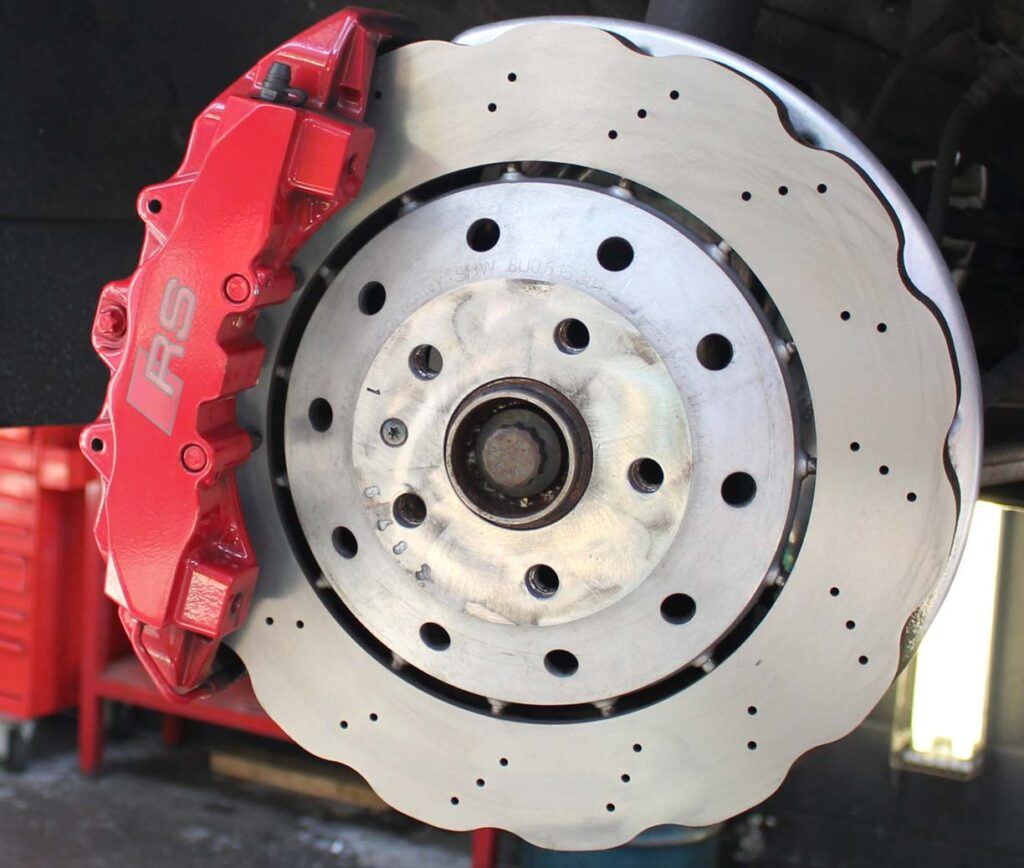
There is no single kilometre figure that applies to every European vehicle. Brake wear depends on driving style, driving environment, vehicle weight, and the specification of pads fitted. That said, there are clear signals to watch for.
Warning signs that mean book in promptly
- A high-pitched squeal during light braking, this is the wear indicator contacting the rotor, and it means pad replacement is due
- A grinding or scraping noise, pads have worn past the indicator and metal is contacting metal. This is urgent and will cause rotor damage if not addressed immediately
- A pulsing or vibrating sensation through the brake pedal, often indicates warped or unevenly worn rotors
- The vehicle pulling to one side under braking, uneven pad wear or a sticking caliper on one side
- A soft or spongy pedal, typically points to brake fluid contamination or air in the hydraulic system
- The brake warning light illuminating, can indicate low pad thickness, low fluid level, or a system fault requiring diagnostic confirmation
Typical brake pad lifespan
As a general guide for Sydney driving conditions:
- City and stop-start driving (Eastern Suburbs, CBD, inner west): 25,000 to 40,000 km
- Mixed city and motorway driving: 35,000 to 55,000 km
- Performance models and AMG, M, S-Line, Quadrifoglio variants: 20,000 to 35,000 km front, longer rear
Rotors typically last through one to two pad changes before they require replacement, depending on thickness and wear pattern. A good brake inspection at each logbook service will track where your rotors sit against the minimum thickness specification.
What Is Included in a Proper Brake Service?
A genuine brake service for a European vehicle covers more than swapping pads. At Platinum Automotive Care, a full brake service includes:
- Removal and inspection of pads, measuring remaining thickness against minimum specification
- Rotor measurement, checking thickness and lateral runout against the manufacturer’s minimum discard specification
- Caliper inspection, checking for seized slider pins, leaking seals, and uneven piston retraction
- Electronic parking brake retraction on EPB-equipped vehicles using diagnostic tooling
- Brake fluid condition check, testing for moisture content and verifying the last replacement date
- Bed-in procedure guidance, European performance pads require a specific warm-up sequence after fitting to properly seat the compound to the rotor
- Brake warning light reset and system verification
Note: A brake inspection at each logbook service is included as standard. A standalone brake service is scheduled when wear reaches the service threshold or when a warning sign presents.
Brake Repair Costs by European Make
The following tables reflect typical brake service costs at Platinum Automotive Care as of 2026. Prices are for vehicles that are out of the manufacturer’s new car warranty period. Costs vary based on model variant, whether rotors require replacement, and access complexity for the specific generation.
BMW
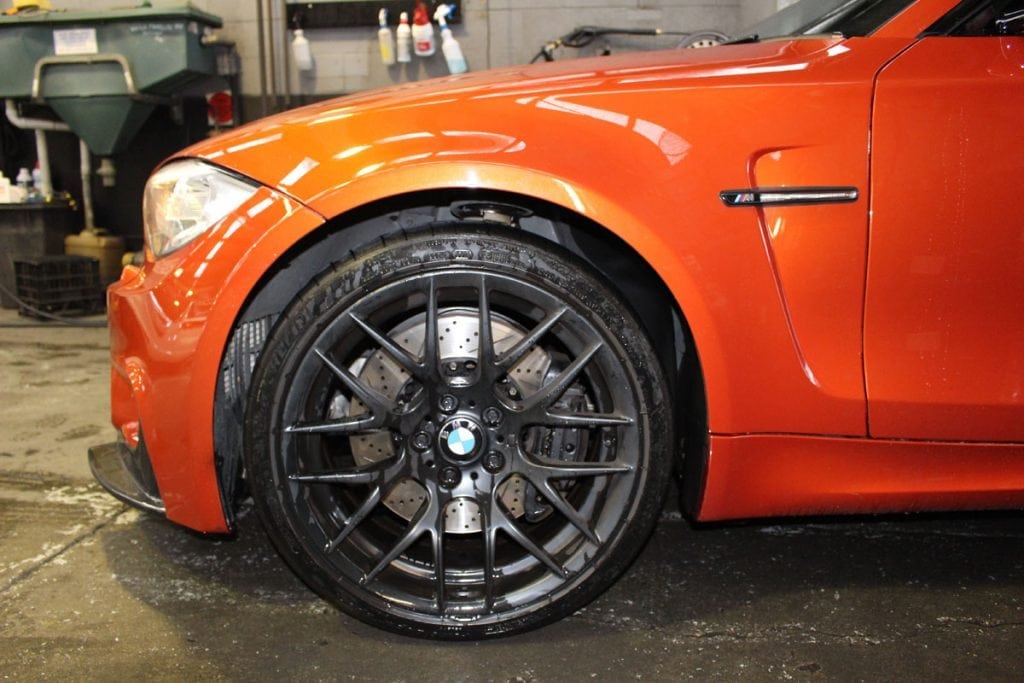
BMW brake systems span a wide range from standard-spec 3 Series setups through to the M compound brakes on M3 and M5 variants. The electronic parking brake is standard across most post-2013 BMW models. BMW specifies a two-year brake fluid change interval.
| Service Type | Estimated Cost (AUD) | Notes |
| Brake Pad Replacement (Front) | $350 – $580 | Includes electronic parking brake retraction where fitted |
| Brake Pad Replacement (Rear) | $380 – $620 | EPB retraction required on all rear calipers |
| Brake Rotor Replacement (Per Axle) | $280 – $650 | Parts cost varies significantly by model and rotor size |
| Full Brake Service (Pads + Rotors, One Axle) | $600 – $1,150 | M Sport and xDrive variants typically at higher end |
| Brake Fluid Replacement | $120 – $180 | BMW specification fluid only; every two years |
| Brake Caliper Service | $200 – $450 | Slider pin service, seal inspection, piston assessment |
Note: M Performance and M Sport models with blue or red calipers require M-specification brake compound. M3/M4/M5 with carbon ceramic brakes are a specialist job, please contact us to discuss.
Mercedes-Benz
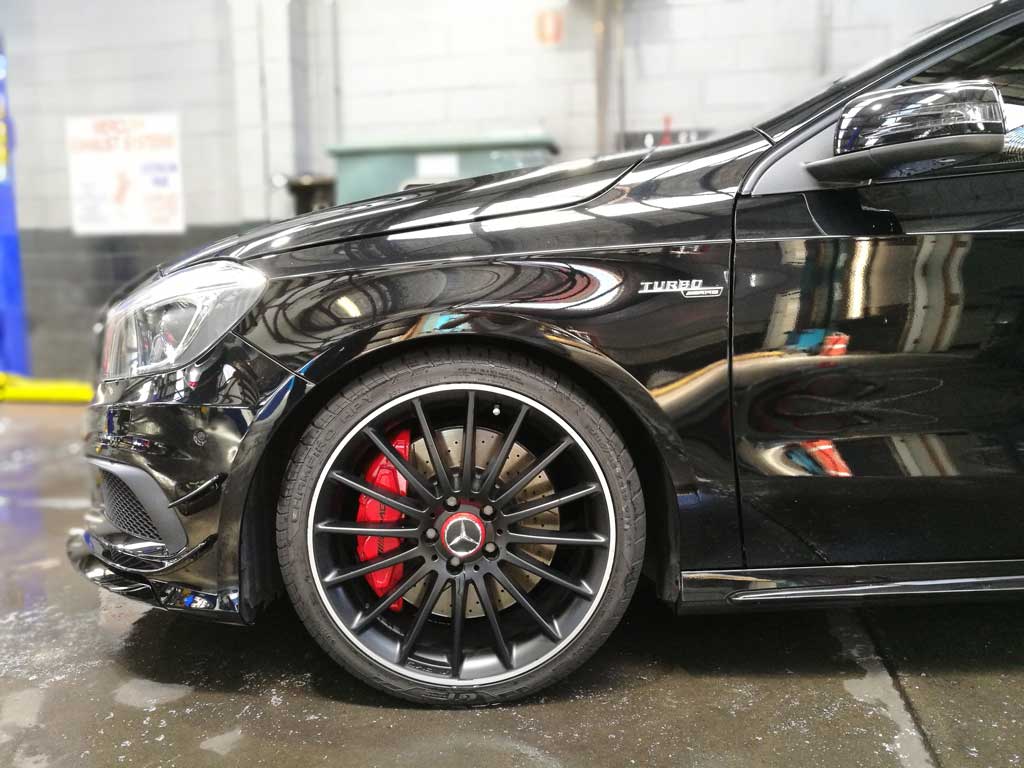
Mercedes-Benz brake systems are known for consistent feel and high thermal capacity. AMG variants run larger rotors, multi-piston calipers, and in some cases cross-drilled or slotted rotors as factory equipment. Mercedes specifies brake fluid replacement every two years or at Service B, whichever comes first.
| Service Type | Estimated Cost (AUD) | Notes |
| Brake Pad Replacement (Front) | $380 – $620 | OEM or approved equivalent compound required |
| Brake Pad Replacement (Rear) | $400 – $640 | EPB retraction required; diagnostic tool essential |
| Brake Rotor Replacement (Per Axle) | $320 – $750 | AMG rotors and cross-drilled variants at higher end |
| Full Brake Service (Pads + Rotors, One Axle) | $680 – $1,300 | E-Class and above typically higher due to rotor size |
| Brake Fluid Replacement | $130 – $190 | MB-approved specification; every two years |
| Brake Caliper Service | $220 – $480 | AMG multi-piston calipers require additional time |
Note: AMG 63 and AMG 45 variants with performance brake packages should be discussed directly with us. Ceramic composite brake options require specialist handling.
Audi
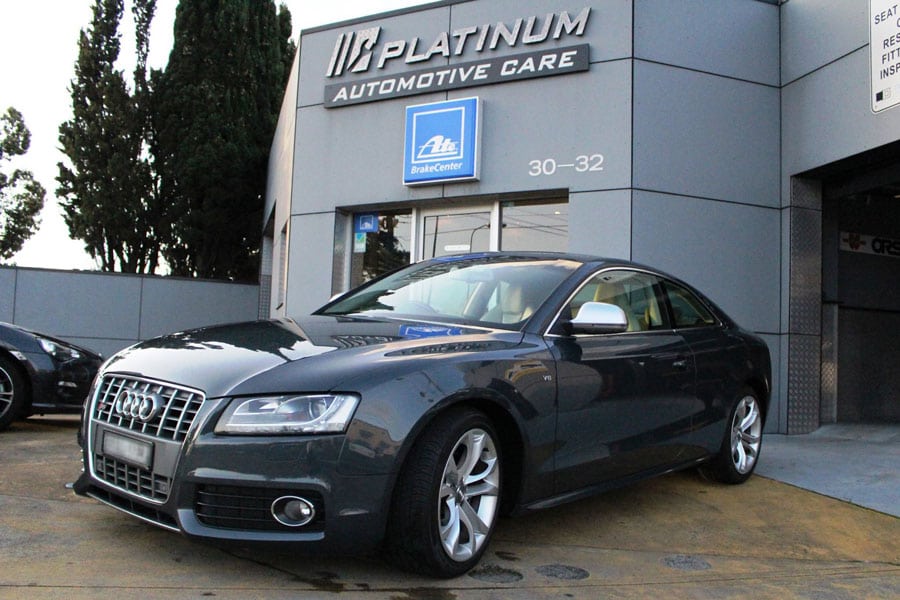
Audi brake systems across the A-series and Q-series are well-engineered for longevity with correct maintenance. S and RS variants run significantly larger rotors and higher-performance pad compounds. The Audi electronic parking brake is standard across most current models and requires correct retraction tooling for rear brake work.
| Service Type | Estimated Cost (AUD) | Notes |
| Brake Pad Replacement (Front) | $360 – $600 | S-Line and S variants at higher specification |
| Brake Pad Replacement (Rear) | $380 – $640 | EPB retraction using VCDS or equivalent tooling |
| Brake Rotor Replacement (Per Axle) | $300 – $700 | RS and S models require manufacturer-spec rotors |
| Full Brake Service (Pads + Rotors, One Axle) | $640 – $1,250 | Q7/Q8 and RS variants at upper end due to rotor size |
| Brake Fluid Replacement | $120 – $180 | VW Group specification; every two years |
| Brake Caliper Service | $200 – $460 | RS multi-piston calipers require additional labour |
Note: Audi RS models with optional ceramic brakes (e.g. RS6, RS7, R8) are a specialist discussion. Contact us with your model details before booking.
Volkswagen
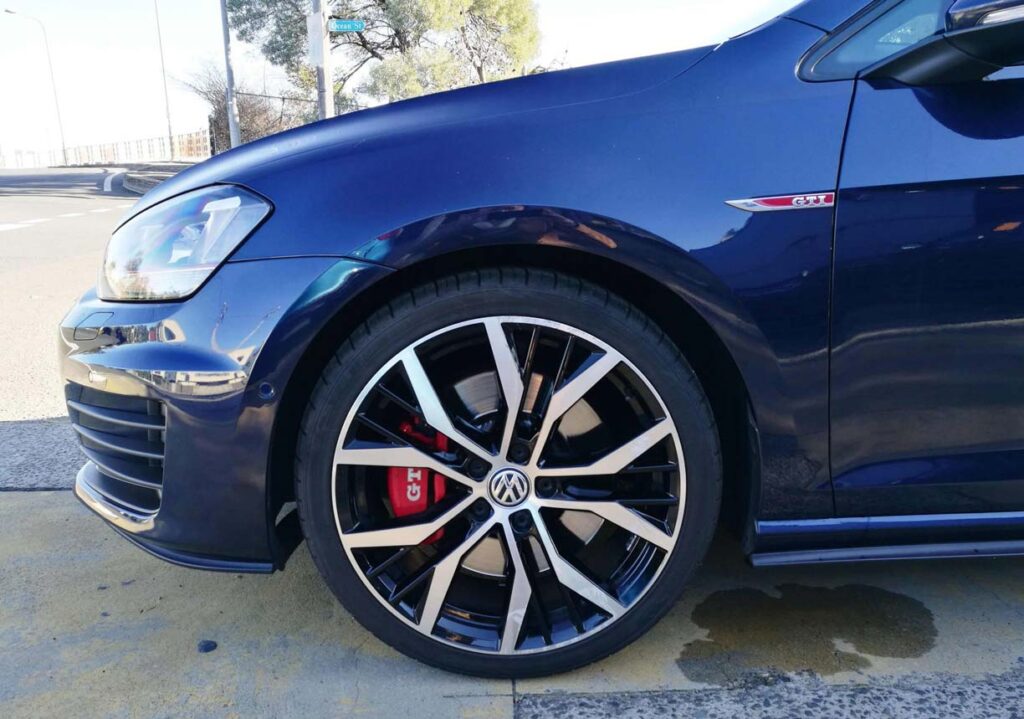
Volkswagen brake systems share much of their engineering with Audi across the VAG platform, making them well-understood and straightforward to service with the right tooling. The GTI and R variants run larger discs and higher-spec pads. Electronic parking brake is standard on Tiguan, Passat, Touareg, and Arteon.
| Service Type | Estimated Cost (AUD) | Notes |
| Brake Pad Replacement (Front) | $300 – $520 | Golf GTI and R at higher end due to compound spec |
| Brake Pad Replacement (Rear) | $320 – $540 | EPB retraction required on Tiguan, Passat, Touareg |
| Brake Rotor Replacement (Per Axle) | $240 – $580 | Touareg and large SUV variants at higher end |
| Full Brake Service (Pads + Rotors, One Axle) | $520 – $1,050 | GTI/R and Touareg at upper range |
| Brake Fluid Replacement | $110 – $170 | VW Group specification; every two years |
| Brake Caliper Service | $180 – $400 | Consistent across most VW range |
Note: Amarok brake servicing follows a different schedule given its commercial load rating. Contact us with your specific Amarok variant for a tailored quote.
MINI
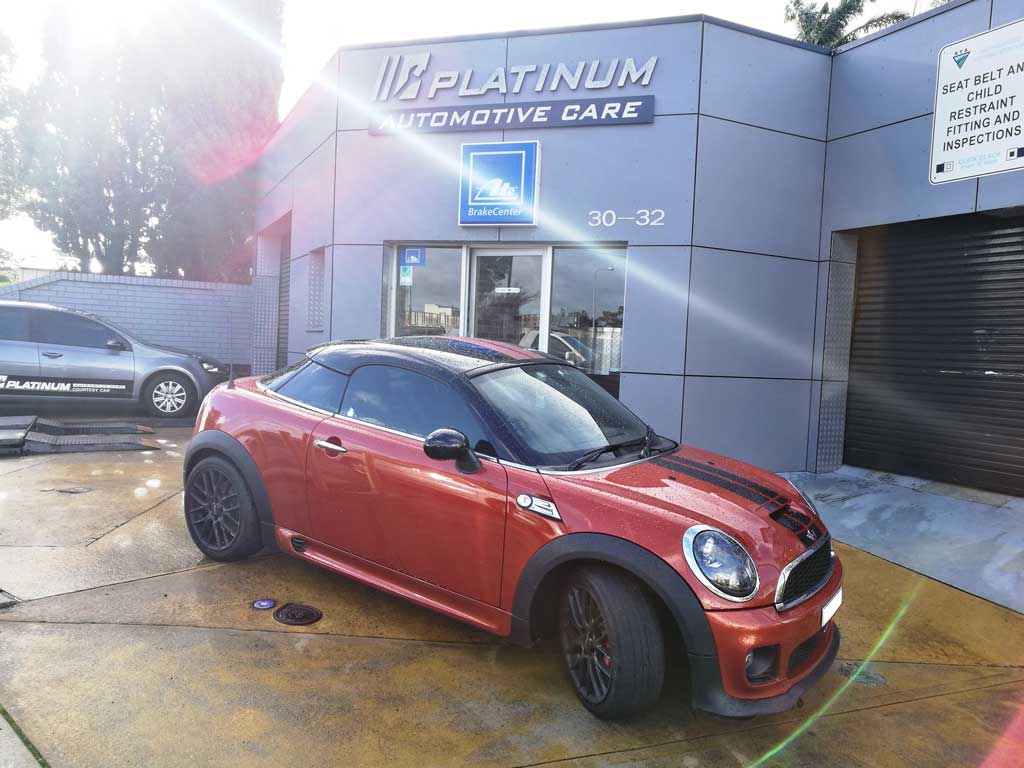
MINI brake systems are BMW Group engineered and carry similar quality standards to their BMW counterparts. MINI Cooper S and JCW (John Cooper Works) variants run larger discs and sportier pad compounds. Most current MINI models use an electronic parking brake, and brake fluid replacement follows BMW’s two-year interval.
| Service Type | Estimated Cost (AUD) | Notes |
| Brake Pad Replacement (Front) | $320 – $520 | JCW compound at higher end; Cooper S mid-range |
| Brake Pad Replacement (Rear) | $340 – $550 | EPB retraction required on most post-2014 models |
| Brake Rotor Replacement (Per Axle) | $240 – $520 | JCW rotors are larger and priced accordingly |
| Full Brake Service (Pads + Rotors, One Axle) | $540 – $1,000 | JCW and Countryman JCW at upper end |
| Brake Fluid Replacement | $120 – $175 | BMW Group specification; every two years |
| Brake Caliper Service | $190 – $380 | Consistent across MINI range |
Skoda
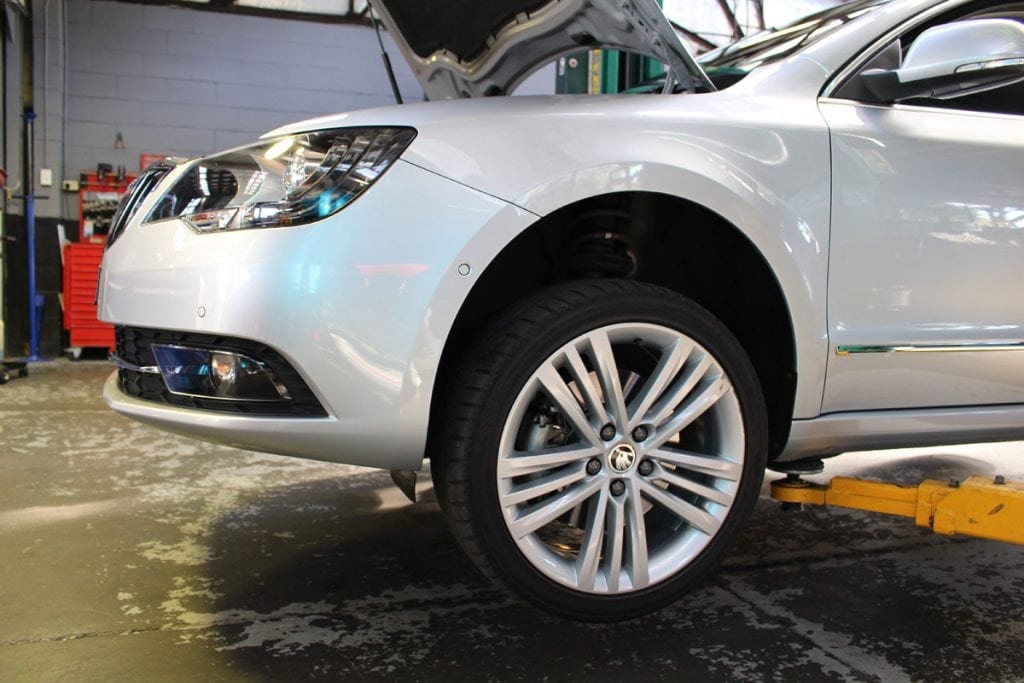
Skoda shares the VAG platform with Volkswagen and Audi, which means excellent parts availability and well-understood brake systems. The Skoda Octavia vRS and Kodiaq RS variants run upgraded brake packages. Electronic parking brake is fitted to the Superb, Kodiaq, and Karoq from certain model years.
| Service Type | Estimated Cost (AUD) | Notes |
| Brake Pad Replacement (Front) | $280 – $480 | vRS variants at higher end due to performance compound |
| Brake Pad Replacement (Rear) | $300 – $500 | EPB retraction required on Superb, Kodiaq, Karoq |
| Brake Rotor Replacement (Per Axle) | $220 – $520 | Kodiaq RS at higher end |
| Full Brake Service (Pads + Rotors, One Axle) | $480 – $950 | Strong value given platform quality |
| Brake Fluid Replacement | $110 – $170 | VW Group specification; every two years |
| Brake Caliper Service | $170 – $380 | Consistent across Skoda range |
Alfa Romeo
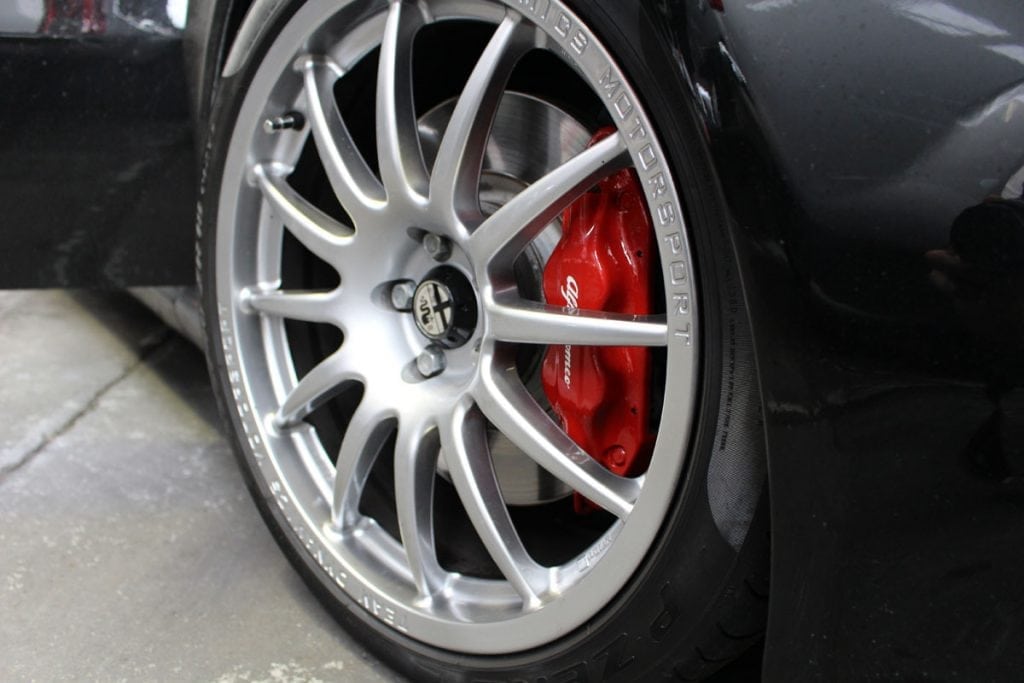
Alfa Romeo brake systems are designed with driving dynamics as a priority. The Giulia and Stelvio run Brembo-sourced calipers as standard on higher variants, and the Giulia Quadrifoglio is available with optional carbon ceramic brakes, one of the most capable brake systems fitted to any production road car. Electronic parking brake is standard across current Alfa Romeo models.
| Service Type | Estimated Cost (AUD) | Notes |
| Brake Pad Replacement (Front) | $380 – $680 | Brembo compound required on Giulia/Stelvio higher variants |
| Brake Pad Replacement (Rear) | $400 – $700 | EPB retraction required; Alfa-specific tooling essential |
| Brake Rotor Replacement (Per Axle) | $320 – $800 | Quadrifoglio rotors are significantly larger |
| Full Brake Service (Pads + Rotors, One Axle) | $700 – $1,400 | Quadrifoglio and Stelvio QV at upper end |
| Brake Fluid Replacement | $130 – $190 | Alfa Romeo specification; every two years |
| Brake Caliper Service | $220 – $500 | Brembo multi-piston calipers require additional time |
Note: Giulia Quadrifoglio with carbon ceramic brakes (CCB) requires specialist handling and dedicated CCB pads. Contact us before booking.
Quick Reference: Brake Pad Replacement by Make
The following summary covers the most common brake service, pad replacement per axle, across all seven makes. This is the starting point for most brake appointments.
| Vehicle Make | Typical Brake Pad Replacement (Per Axle, AUD) |
| BMW | $350 – $620 per axle (standard); M variants higher |
| Mercedes-Benz | $380 – $640 per axle (standard); AMG variants higher |
| Audi | $360 – $640 per axle (standard); S and RS variants higher |
| Volkswagen | $300 – $540 per axle (standard); GTI/R variants higher |
| MINI | $320 – $550 per axle (standard); JCW variants higher |
| Skoda | $280 – $500 per axle (standard); vRS variants higher |
| Alfa Romeo | $380 – $700 per axle (standard); Quadrifoglio variants higher |
Note: All prices are for brake pad replacement per axle using OEM or OEM-equivalent parts. Rotor replacement, caliper service, and brake fluid are additional where required. Prices are indicative for Sydney as of 2026. Your specific cost will be confirmed by written quote before any work commences.
What Determines Where Your Cost Lands
The ranges above reflect real variation. Here is what moves a brake job from the lower end to the upper end of the estimate.
Parts specification
OEM-equivalent pads from approved suppliers are our default. Where a vehicle’s warranty or the owner’s preference requires genuine manufacturer parts, costs will reflect the higher parts price. Performance compounds for M, AMG, RS, JCW, Quadrifoglio, GTI, and vRS variants are priced higher than standard-grade parts.
Whether rotors need replacement
This is the biggest variable. If your rotors measure above minimum thickness and show no scoring or runout, pads alone may be all that is needed. If your rotors are below minimum, attempting to fit new pads on worn rotors is false economy, it shortens pad life and compromises braking feel. We measure and advise before recommending.
Caliper condition
A seized slider pin or sticking caliper piston causes uneven pad wear and can destroy a new set of pads within 10,000 km. Where we identify caliper issues during a brake service, we will advise and quote before proceeding. Addressing a caliper issue at the same time as pad replacement saves significant labour cost compared to a return visit.
Axle location
Rear brakes on EPB-equipped vehicles require diagnostic retraction, which adds time. Rear rotors on some European models also require specific disassembly to access correctly.
Vehicle generation and age
Older vehicles with corroded caliper hardware, seized guide bolts, or stuck dust shields take more labour time to service safely. This is particularly relevant for vehicles in coastal areas like Pagewood and the Eastern Suburbs, where salt air accelerates surface corrosion on brake hardware.
Why Regular Brake Servicing Saves You Money
Brakes are not a set-and-forget system. Deferring a brake service past the point where pads need replacement costs significantly more than addressing it on time.
- Worn pads that contact the rotor directly cause scoring and heat distortion that requires rotor replacement, turning a pad-only job into a pads-and-rotors job
- Contaminated brake fluid raises moisture content and lowers the boiling point, increasing the risk of brake fade and potentially damaging ABS modulators
- Seized calipers or sticking slider pins cause uneven wear, meaning a new set of pads wears asymmetrically and may need early replacement
- A brake fault that causes an accident or a failed rego check inspection is always more expensive than the service that would have prevented it
Brake fluid replacement every two years is the single lowest-cost preventive action you can take for the brake system. It is easy to overlook because the fluid is out of sight, but it is on the mandatory schedule for every European make we service.
Why Choose Us for Your European Brake Service in Sydney?
Platinum Automotive Care is one of the first workshops in Australia to be accredited as an ATE Brakes Service Centre. ATE is an original equipment supplier to BMW, Mercedes-Benz, Audi, and Volkswagen at the factory level. That accreditation is not a badge, it reflects verified competency, specific tooling, and adherence to ATE’s service standards for European braking systems.
- Factory-grade diagnostic equipment for electronic parking brake retraction on all seven makes
- Genuine or OEM-equivalent parts, correct specification for your model, not generic alternatives
- Full written quote before any work commences, no surprises
- Brake fluid replacement using manufacturer-specified fluid for each make
- Logbook stamping and documentation for warranty compliance
- ATE Brakes Service Centre accreditation, one of Australia’s first
- Over 60 years of European car experience from our Pagewood workshop
Whether you drive a standard Golf, an Audi Q5, a BMW M Sport, or a Giulia Quadrifoglio, your brakes receive the same attention to specification and safety. We explain what we found, what we recommend, and why, before we touch anything.
Need a brake inspection or quote in Sydney? Book your service with Platinum Automotive Care today.
Frequently Asked Questions, European Brake Repairs
How do I know if my European car needs new brakes?
The clearest signs are: a squealing or scraping noise under braking, a pulsing or vibrating pedal, the vehicle pulling to one side when braking, a soft or spongy pedal feel, or a brake warning light on the dashboard. Any of these should be inspected promptly. European vehicles also have wear indicators that contact the rotor and create a deliberate squeal when pads approach minimum thickness, this is the system working as designed, and it means replacement is due.
How much does a brake service cost for a European car in Sydney?
Brake pad replacement per axle for European vehicles in Sydney typically ranges from $280 to $700 depending on make, variant, and whether the vehicle is a standard or performance model. Rotor replacement adds $220 to $800 per axle depending on the vehicle. Brake fluid replacement is $110 to $190. The exact cost for your vehicle will be confirmed by written quote before any work begins. See the tables above for a full breakdown by make.
Can I drive with a brake warning light on?
It depends on the light. A low brake fluid warning (often a red exclamation mark inside a circle) is serious, do not delay. An amber brake wear indicator means replacement is needed soon but is not immediately dangerous if the car brakes normally. Any brake warning that appears alongside changes in brake feel, unusual noise, or pulling should be treated as urgent. If you are unsure, book a diagnostic check and do not defer it.
How often should brake fluid be replaced on a European car?
Every two years, regardless of kilometre reading. This applies to BMW, Mercedes-Benz, Audi, Volkswagen, MINI, Skoda, and Alfa Romeo. Brake fluid absorbs moisture from the atmosphere over time, which progressively lowers its boiling point. In a vehicle with performance braking demands, degraded fluid increases the risk of brake fade under sustained use. The two-year interval is a manufacturer requirement, not a conservative recommendation.
Do rear brake pads on European cars cost more than front?
On EPB-equipped vehicles, which includes most current European models, rear brake pad replacement involves electronic parking brake retraction using a diagnostic tool, which adds labour time. This makes rear brake work slightly more labour-intensive than front on these models. Parts cost is generally similar between front and rear for the same vehicle, though front pads tend to wear faster and are typically replaced more frequently.
Can I service my brakes at an independent workshop without voiding my warranty?
Yes. Under Australian Consumer Law, your new car warranty remains valid provided the service is performed by a qualified technician using approved parts and following manufacturer specifications. At Platinum Automotive Care, we are authorised by the Motor Traders’ Association of NSW to conduct manufacturer’s logbook services. All brake work is documented and your logbook is stamped correctly.
What is the difference between brake pad replacement and a full brake service?
Brake pad replacement covers removing worn pads and fitting new ones, with EPB retraction where required, a check of rotor thickness, and a fluid condition check. A full brake service includes all of this plus rotor measurement and replacement where needed, caliper inspection and service, brake fluid replacement, and a full system function check. What your vehicle needs depends on current wear levels, which we assess and advise on before quoting.
Why does my European car’s brake job cost more than a standard car?
Three main reasons: higher-specification parts that meet European manufacturer compound and material requirements; electronic parking brake systems that require diagnostic tooling for correct service; and larger rotor sizes on many European models that cost more in both parts and labour. The engineering that makes these vehicles safer and more rewarding to drive is the same engineering that requires specialist knowledge and parts to service correctly.
How long does a brake service take?
A standard brake pad replacement on one axle typically takes one to two hours. A full brake service covering both axles, including rotor replacement and brake fluid change, typically takes two to four hours depending on the vehicle. We will confirm the expected time when you book and aim to complete most services same-day.
Get Reliable European Brake Servicing, Without Uncertainty on Cost
From a brake fluid change to a full caliper and rotor service on an AMG or Quadrifoglio, we have the tooling, accreditation, and experience to do it correctly. Transparent quoting before every job. No work starts without your approval.
Call (02) 9316-8382 or book online for your European brake service in Pagewood, Sydney.

Business Hours
-
Monday8:00am - 5:00pm
-
Tuesday8:00am - 5:00pm
-
Wednesday8:00am - 5:00pm
-
Thursday8:00am - 5:00pm
-
Friday8:00am - 5:00pm
-
SaturdayClosed
-
SundayClosed